Is It Pudding or a Prank? The Ultimate British Sweet Treats Challenge for Americans
You got 23 out of 24!
You scored better than 94% of players!
God save the King, and God save your teeth! Your blood is 40% golden syrup and you can differentiate between 15 types of regional fruitcake by scent alone. You know that a 'fool' is delicious and 'Spotted Dick' is a classic. You are officially invited to high tea at the Palace—don't forget to keep your pinky up.
23/24. Feel a fraud playing this as not American from U.K. so should know them, still got one wrong, can’t remember which one not heard of a few, think it because of Regional differences we don’t have them in our neck of the woods, ha ha.
24/24 God save the King, and God save your teeth! Your blood is 40% golden syrup and you can differentiate between 15 types of regional fruitcake by scent alone. You know that a ‘fool’ is delicious and ‘Spotted Dick’ is a classic. You are officially invited to high tea at the Palace—don’t forget to keep your pinky up.
I got 18 out of 24! God save the King, and God save your teeth! Your blood is 40% golden syrup and you can differentiate between 15 types of regional fruitcake by scent alone. You know that a ‘fool’ is delicious and ‘Spotted Dick’ is a classic. You are officially invited to high tea at the Palace—don’t forget to keep your pinky up.
My pinky always seems to be up when I drink, anyway-so I’m told. =>
Look at you! You know your Bakewell from your Banoffee. You understand that ‘pudding’ is a course, not just a texture. You’ve likely debated the ‘Jam vs. Cream’ first rule on a scone and won. You’re one Union Jack apron away from being a regular at a village fete.
I got 11 out of 24! You can spot a scone from a mile away and you know a Victoria Sponge isn’t a cleaning tool. However, you’re still a bit baffled by suet and the idea of ‘treacle’ sounds like something from a Harry Potter potion class. You’ve got the basics down, but you’d still hesitate if offered a piece of Singing Hinny.
About This Quiz
You are playing as a guest. Sign in to save your progress & unlock rewards!
There is a specific kind of confusion that happens when an American walks into a British bakery for the first time. You see something that looks like a cake, but the sign says it is a pudding. You see something that looks like a biscuit, but someone calls it a scone. And then, just when you think you have a handle on things, someone mentions Spotted Dick with a completely straight face.
I lived in London for three years, and my first month was basically one long, delicious identity crisis. I grew up thinking pudding was a creamy substance that came in a plastic cup with a foil lid. In the UK, pudding is an entire philosophy. It is a category of existence. It can be steamed, baked, boiled, or chilled. It can be a massive sponge soaked in syrup or a delicate pile of cream and berries.
This quiz is designed to bridge that gap. Whether you are a fan of The Great British Bake Off or you just really like sugar, understanding British desserts is like learning a delicious second language. It is about more than just eating; it is about history, regional pride, and a very serious commitment to heavy cream.
What Makes a Dessert Truly British?
Before you start clicking through the questions, it helps to understand the DNA of a British sweet treat. While American desserts often lean heavily on frosting, extreme sweetness, and high-fructose flair, British desserts tend to be a bit more... structural. They are built for the weather, which is to say, they are often designed to keep you warm and happy when it is raining outside for the tenth day in a row.
Here are a few key elements you will see popping up throughout the quiz:
The Suet Factor: Traditional British puddings often used suet (beef or mutton fat) to create a rich, heavy texture in steamed cakes. While many modern recipes use butter, that classic "heaviness" is a hallmark of the old-school treats.
Custard is King: If a dessert exists in the UK, someone has probably tried to pour hot custard over it. It is the universal solvent of the British dessert world.
The Power of Jam: From the Jammy Dodger to the Victoria Sponge, fruit preserves do a lot of the heavy lifting. Raspberry and strawberry are the superstars here.
Dried Fruit Everywhere: Currants, sultanas, and raisins are not just for trail mix. They are the backbone of many "spotted" or "fruity" bakes.
A Brief Guide to Pudding Terminology
To score high on this quiz, you need to think like a local. If you hear the word sponge, do not think of a cleaning tool. Think of a light, airy cake. If someone mentions treacle, they are talking about a thick, dark syrup that makes everything taste like a campfire made of sugar.
One of my favorite things about British desserts is the naming convention. The names are often descriptive, historical, or just plain fun to say. Take the Eton Mess, for example. Legend has it that a dog knocked over a pavlova at Eton College, and the resulting pile of smashed meringue and berries was so tasty they just kept serving it that way. Whether that story is true or not doesn't really matter—it tells you exactly what to expect: a delicious mess.
Then you have the regional heavyweights. The Bakewell Tart comes from a small town in Derbyshire, and people there are very protective of the recipe. It is a specific combination of shortcrust pastry, jam, and frangipane. If you get it wrong, you might start a small local uprising.
Why Americans Struggle With These Questions
The main reason Americans find this quiz tricky is the "False Friend" phenomenon. We use the same words for different things. In the US, a biscuit is a fluffy, buttery bread served with gravy. In the UK, a biscuit is a cookie. If you go looking for a "cookie" in a British supermarket, you will find something very specific (usually large and soft), but the vast majority of what we call cookies are biscuits over there.
Then there is the Scone. This is perhaps the greatest point of contention. An American scone is often a large, triangular, heavily glazed wedge filled with blueberries or chocolate chips. A British scone is a tall, round, lightly sweetened bun meant to be split in half and loaded with clotted cream and jam.
Note: Never call it a "biscuit" in front of a Brit unless you want to see a look of pure, refined pain on their face.
How to Take the British Dessert Identification Quiz
We want you to come away from this quiz feeling like a dessert expert. Whether you get 5/24 or 24/24, the goal is to learn the stories behind these iconic treats.
Read the question carefully: Some desserts look very similar (like the different types of steamed puddings). Look for keywords about ingredients or origins.
Examine the image: We have provided image keywords to help you visualize exactly what each dessert looks like. Pay attention to the textures!
Learn as you go: After every question, we provide a short explanation. Even if you guess wrong, you will get a bit of trivia that might help you with the next question.
Check the leaderboard: Once you finish, see where you stand. You can earn points for every correct answer and climb our global rankings.
Challenge a friend: These quizzes are best enjoyed with others. Send the link to your friend who thinks they are a master baker and see if they can tell a Jam Roly-Poly from an Arctic Roll.
The Evolution of the British Sweet Tooth
British desserts have come a long way from the medieval days of "pottage" and bread-thickened porridges. During the Victorian era, the availability of sugar and ice changed the game entirely. This gave rise to the more elaborate "Showstopper" desserts like the Trifle.
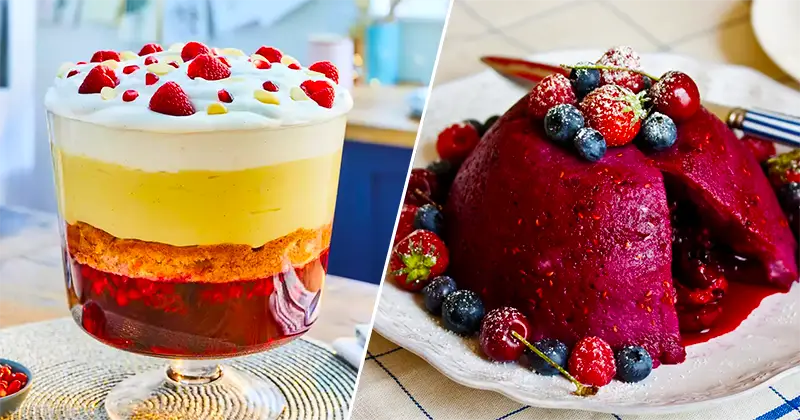
A proper Trifle is a work of art. It requires layers. You need the sponge soaked in sherry, the fruit jelly, the thick layer of custard, and a massive cloud of whipped cream on top. It is the kind of dessert that looks beautiful in a glass bowl right up until the moment someone takes the first scoop.
In the 20th century, school dinners (cafeteria food) played a huge role in dessert culture. Many Brits have a deep, nostalgic love for "School Dinner Puddings." These are usually simple, warm, and served with a lot of custard. Things like Jam and Coconut Sponge or Cornflake Tart might not be served at a five-star hotel, but for millions of people, they are the ultimate comfort food.
Can You Identify These Classic British Desserts?
The British dessert world is vast, sugary, and full of surprises. It is a mix of high-society tea parties and humble school lunchrooms. It is about tradition, but it is also about having fun with your food.
As you go through these 30 questions, try to imagine the textures. Think about the crunch of the meringue in an Eton Mess, the chewiness of the crust on a Treacle Tart, and the cold, smooth center of an Arctic Roll.
If you find yourself getting hungry, don't say I didn't warn you. You might find yourself searching for the nearest international grocery store by the time you reach question fifteen.
Good luck, keep an eye on those leaderboards, and let's see if you have what it takes to be the sovereign of the sweet trolley!
Unlock Premium Perks
Enjoy Quizly? Upgrade to Premium for an ad-free experience and exclusive features.

 Play quiz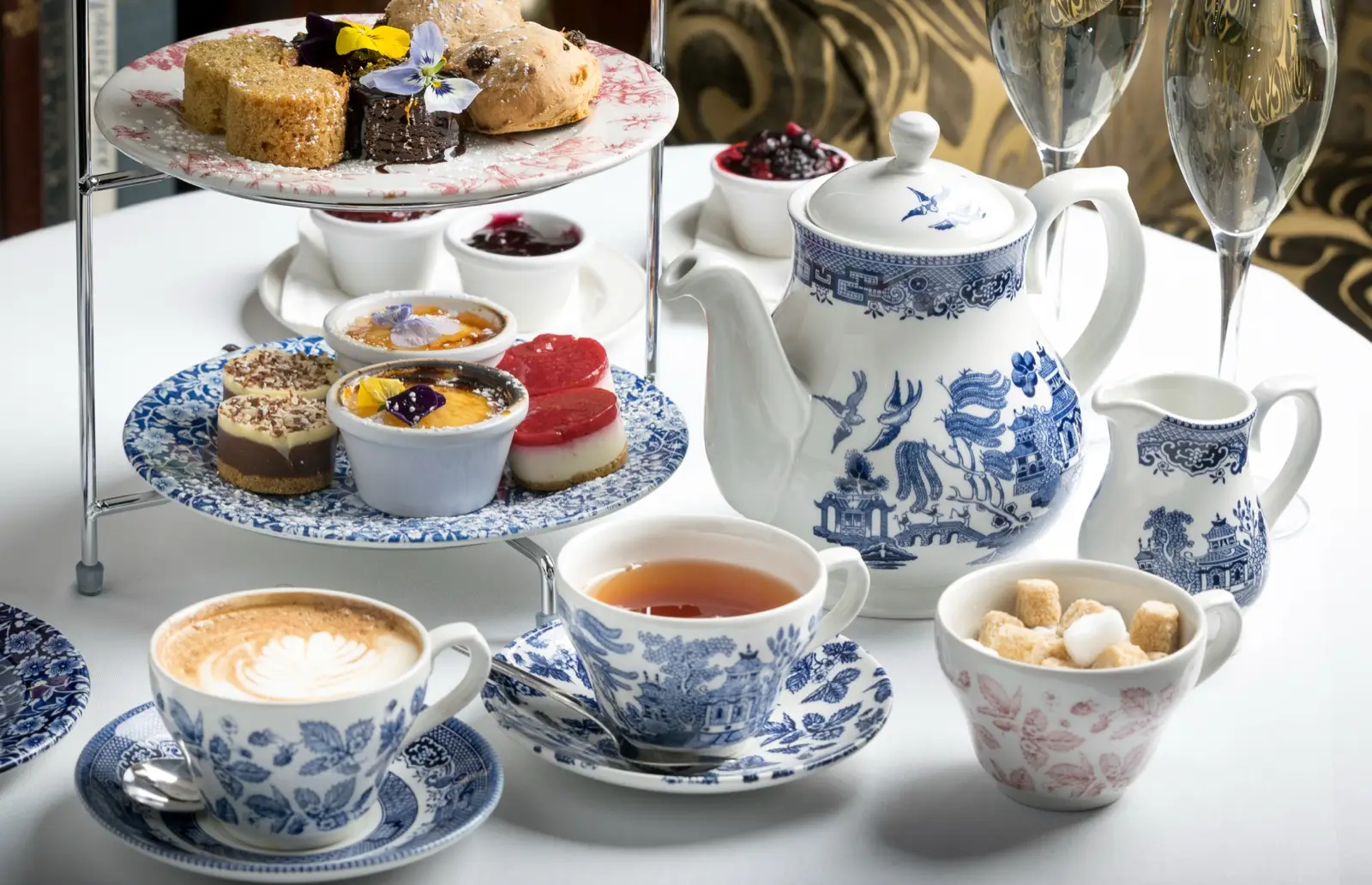
 You are playing as a guest. Sign in to save your progress & unlock rewards!



















16 / 24
8/24👍
23/24. Feel a fraud playing this as not American from U.K. so should know them, still got one wrong, can’t remember which one not heard of a few, think it because of Regional differences we don’t have them in our neck of the woods, ha ha.
24/24
God save the King, and God save your teeth! Your blood is 40% golden syrup and you can differentiate between 15 types of regional fruitcake by scent alone. You know that a ‘fool’ is delicious and ‘Spotted Dick’ is a classic. You are officially invited to high tea at the Palace—don’t forget to keep your pinky up.
I got 18 out of 24!
God save the King, and God save your teeth! Your blood is 40% golden syrup and you can differentiate between 15 types of regional fruitcake by scent alone. You know that a ‘fool’ is delicious and ‘Spotted Dick’ is a classic. You are officially invited to high tea at the Palace—don’t forget to keep your pinky up.
My pinky always seems to be up when I drink, anyway-so I’m told. =>
I got 15 out of 24!
Look at you! You know your Bakewell from your Banoffee. You understand that ‘pudding’ is a course, not just a texture. You’ve likely debated the ‘Jam vs. Cream’ first rule on a scone and won. You’re one Union Jack apron away from being a regular at a village fete.
I got 11 out of 24!
You can spot a scone from a mile away and you know a Victoria Sponge isn’t a cleaning tool. However, you’re still a bit baffled by suet and the idea of ‘treacle’ sounds like something from a Harry Potter potion class. You’ve got the basics down, but you’d still hesitate if offered a piece of Singing Hinny.