The Ultimate Mercury Trivia Quiz! How Well Do You Know the Planet of Wild Extremes?
You got 11 out of 22!
You scored better than 32% of players!
t
Every great journey starts with a single step, and you just took a big one into the cosmos! Don't worry about the score. The most important thing is that you were curious enough to take the challenge. You've now learned some amazing new facts about the speedy planet Mercury. Keep that curious spirit alive and continue exploring the universe's wonders!
I got 11 out of 22 – 50% Every great journey starts with a single step, and you just took a big one into the cosmos! Don’t worry about the score. The most important thing is that you were curious enough to take the challenge. You’ve now learned some amazing new facts about the speedy planet Mercury. Keep that curious spirit alive and continue exploring the universe’s wonders!
Nice work, you’re a skilled stargazer! You’ve clearly got a good grasp on the basics of our solar system’s smallest planet. You might not know every single crater by name just yet, but you’re well on your way. Your score shows a solid foundation of cosmic curiosity, and a little more exploring is all it’ll take to become a true expert.
I got 16 out of 22! Nice work, you’re a skilled stargazer! You’ve clearly got a good grasp on the basics of our solar system’s smallest planet. You might not know every single crater by name just yet, but you’re well on your way. Your score shows a solid foundation of cosmic curiosity, and a little more exploring is all it’ll take to become a true expert.
Most of what I know about the planets comes from reading sci fi, although I do watch documentaries when they are on TV. Mercury by its nature doesn’t appear much in sci fi stories so I guess I did OK with this quiz.
I got 12 out of 22! Every great journey starts with a single step, and you just took a big one into the cosmos! Don’t worry about the score. The most important thing is that you were curious enough to take the challenge. You’ve now learned some amazing new facts about the speedy planet Mercury. Keep that curious spirit alive and continue exploring the universe’s wonders!
I got 17 out of 22! Nice work, you’re a skilled stargazer! You’ve clearly got a good grasp on the basics of our solar system’s smallest planet. You might not know every single crater by name just yet, but you’re well on your way. Your score shows a solid foundation of cosmic curiosity, and a little more exploring is all it’ll take to become a true expert.
22/22 Wow, call mission control, because we’ve found a Mercury expert! Your knowledge of the swift planet is truly out of this world. You didn’t just ace this quiz; you navigated it like the MESSENGER spacecraft, hitting every target with precision. Your astronomical expertise is seriously impressive, and you clearly have a passion for the cosmos. Keep reaching for the stars!
I got 20 out of 22! Wow, call mission control, because we’ve found a Mercury expert! Your knowledge of the swift planet is truly out of this world. You didn’t just ace this quiz; you navigated it like the MESSENGER spacecraft, hitting every target with precision. Your astronomical expertise is seriously impressive, and you clearly have a passion for the cosmos. Keep reaching for the stars!
About This Quiz
You are playing as a guest. Sign in to save your progress & unlock rewards!
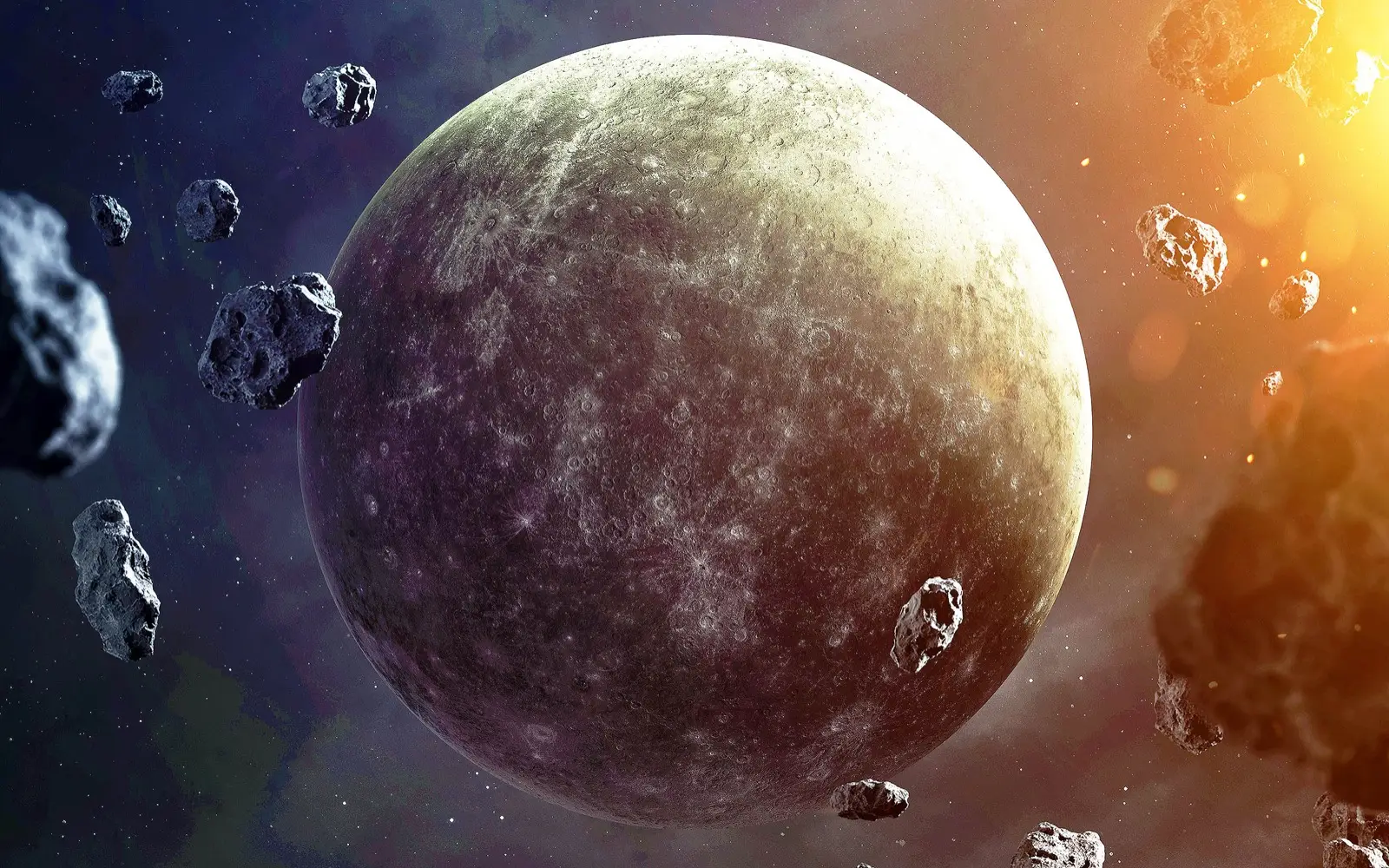
When you think about the planets in our solar system, Mercury probably isn't the first one that comes to mind. Mars gets all the rover attention, Saturn flaunts those gorgeous rings, and Jupiter dominates with its massive size and dramatic storms. Poor Mercury? It's like the middle child of the solar system, quietly doing its own thing while everyone else steals the spotlight.
But here's the thing: Mercury is genuinely fascinating in ways that might surprise you. This tiny planet experiences temperature swings that would make any Earthling's head spin, has a day that lasts longer than its year, and somehow manages to harbor ice despite being the closest planet to the Sun. If that doesn't sound like the plot of a science fiction novel, I don't know what does.
So why should you care about Mercury? Well, beyond the fact that it's literally part of our cosmic neighborhood, understanding this little planet tells us a lot about how our solar system formed and evolved. Plus, there's something incredibly humbling about learning that a planet smaller than some of Jupiter's moons can be so complex and full of surprises.
That's exactly why we created this quiz. Whether you're a space enthusiast who can name all the moons of Saturn or someone who just thinks planets are cool, this Mercury trivia challenge will test what you know—and probably teach you some mind-blowing facts along the way.
Why Mercury Deserves More Attention
Mercury might be small, but it packs a serious punch when it comes to extreme conditions and scientific intrigue. This planet is a study in contrasts, and the more scientists learn about it, the more questions seem to pop up.
For starters, Mercury holds the title for most extreme temperature variations in the solar system. During the day, its surface can reach a scorching 430°C (800°F)—hot enough to melt lead. But when night falls (and trust me, Mercury's nights are long), temperatures plummet to a bone-chilling -180°C (-290°F). That's a temperature swing of over 600 degrees Celsius! To put that in perspective, the most extreme temperature variations on Earth are barely a fraction of that.
Then there's the whole day-night situation. A single day on Mercury—from one sunrise to the next—takes 176 Earth days. Meanwhile, Mercury zips around the Sun in just 88 Earth days. Yes, you read that right: Mercury's year is shorter than its day. Try wrapping your head around that cosmic oddity.
But perhaps the most surprising discovery came when scientists found water ice hiding in permanently shadowed craters near Mercury's poles. Water ice. On the planet closest to the Sun. It's like finding a snowball in a furnace, and it completely changed how scientists think about where water can exist in our solar system.
What Makes Mercury Special?
Beyond the temperature extremes and weird day-night cycle, Mercury has several features that make it stand out in our planetary lineup:
Massive iron core: Mercury's core makes up about 75% of the planet's radius, giving it the largest core relative to its size of any planet in the solar system
Heavily cratered surface: Like our Moon, Mercury's face is covered in impact craters, preserving a record of our solar system's violent early history
Surprising magnetic field: Despite its small size, Mercury has a magnetic field—though it's much weaker than Earth's
Nearly no atmosphere: Mercury has an ultra-thin exosphere rather than a proper atmosphere, which is why it can't retain heat at night
Shrinking planet: Scientists have discovered that Mercury is actually shrinking as its core cools, causing the planet's surface to wrinkle and crack
A Brief History of Mercury Exploration
For most of human history, Mercury remained a mysterious dot in the sky. Ancient civilizations knew about it—the Romans named it after their swift-footed messenger god because of how quickly it appeared to move across the sky—but actual close-up exploration didn't happen until the space age.
As of early 2026, only two spacecraft have ever visited Mercury, and a third is on the way. The first, Mariner 10, flew by the planet three times between 1974 and 1975, mapping about 45% of its surface. That was it for Mercury exploration for over 30 years—a surprisingly long gap when you consider how many missions have visited Mars or studied the outer planets.
Then came MESSENGER (MErcury Surface, Space ENvironment, GEochemistry, and Ranging), which became the first spacecraft to actually orbit Mercury. From 2011 to 2015, MESSENGER revolutionized our understanding of this little planet, mapping its entire surface, discovering that water ice, and revealing the complex geological history written in Mercury's scarred face.
Currently, the BepiColombo mission—a joint project between the European Space Agency and Japan's space agency—is conducting flybys, scheduled to enter orbit in 2026. It'll give us our most detailed look yet at the solar system's innermost world.
The fact that we've sent so few missions to Mercury tells you something important: it's really hard to get there. The Sun's immense gravity makes Mercury a tricky target, requiring complex orbital maneuvers and heat-resistant technology. In some ways, it's actually easier to send a spacecraft to distant Pluto than to our nearest planetary neighbor.
What You'll Learn in This Quiz
This quiz is designed to challenge your knowledge while teaching you genuinely cool facts about Mercury. You won't find boring, overly technical questions here—instead, we've crafted 22 questions that explore Mercury's most interesting features, its exploration history, and the surprising discoveries scientists have made.
You'll encounter questions about:
Mercury's physical characteristics and composition
Its bizarre rotational patterns and orbital mechanics
Temperature extremes and atmospheric conditions
The spacecraft missions that have visited this elusive planet
Surface features like the massive Caloris Basin
Unexpected discoveries like polar ice deposits
How Mercury compares to other planets and moons
Each question comes with detailed explanations so you'll learn something new regardless of whether you answer correctly. Think of it as a fun, interactive way to expand your space knowledge rather than just a test.
Who Should Take This Quiz?
Honestly? Anyone with even a passing interest in space. You don't need to be a rocket scientist or astronomy professor to enjoy this quiz. We've designed it to be accessible to curious minds at all knowledge levels.
Maybe you're a student studying planetary science and want to test your retention. Perhaps you're a space enthusiast who devours every documentary about the solar system. Or maybe you just think planets are neat and want to learn more about one you haven't thought much about.
The quiz works for all these audiences because it covers both basic facts (like Mercury's position in the solar system) and more advanced trivia (like the composition of its exosphere). You'll likely get some questions right based on general knowledge, while others might genuinely surprise you—and that's the point.
How to Take the Quiz
Ready to test your Mercury knowledge? Here's how it works:
Read each question carefully before selecting your answer—some questions might have tricky wording
Choose the answer you think is correct from the multiple-choice options or select True/False
Submit your answer to see if you got it right
Read the explanation that appears after each question—this is where the real learning happens
Continue through all 22 questions at your own pace
Check your final score and see how you rank against other quiz-takers
Compete on our leaderboards by finishing quizzes and scoring points to climb the rankings
Share your results with friends and challenge them to beat your score
There's no time limit, so take your time and enjoy the journey through Mercury's fascinating features. And remember, even if you don't score perfectly, you'll walk away knowing significantly more about this underappreciated planet than you did before.
Why Planetary Knowledge Matters
You might wonder why any of this matters. Mercury is 48 million miles away at its closest approach to Earth—why should we care about its temperature swings or geological features?
The answer is surprisingly practical. Studying planets like Mercury helps scientists understand Earth better. By examining how different planets evolved under different conditions, we gain insights into our own planet's history and future. Mercury's lack of atmosphere, for instance, shows us what happens to a planet that can't hold onto its protective gaseous blanket.
Beyond the scientific value, there's something deeply human about wanting to understand our cosmic neighborhood. These planets are worlds with their own stories, their own characteristics, and their own mysteries. Learning about them expands our perspective and reminds us that we're part of something much larger than ourselves.
Plus, let's be real: knowing random facts about Mercury makes you more interesting at parties. When someone mentions the planet, you can casually drop knowledge about its 176-day solar day or its massive iron core. Education and social currency—what's not to love?
Get Ready to Test Your Knowledge
So, are you ready to find out how much you really know about the solar system's smallest planet? Whether you ace this quiz or discover you have a lot to learn, you're in for an educational adventure that'll change how you think about Mercury.
The questions ahead will challenge you, surprise you, and maybe even make you laugh at how wonderfully weird our solar system can be. Take your time, enjoy the explanations, and don't stress about getting a perfect score. The goal here is learning, exploring, and having fun with planetary science.
Mercury has been overlooked for too long. Let's give this scrappy little planet the attention it deserves—starting with 22 questions that'll test everything you think you know about our Sun's closest companion.
Good luck, space explorer. Mercury is waiting.
Unlock Premium Perks
Enjoy Quizly? Upgrade to Premium for an ad-free experience and exclusive features.


 You are playing as a guest. Sign in to save your progress & unlock rewards!





16/22. This was hard didn’t know much about Mercury, good guesses.
I got 11 out of 22 – 50%
Every great journey starts with a single step, and you just took a big one into the cosmos! Don’t worry about the score. The most important thing is that you were curious enough to take the challenge. You’ve now learned some amazing new facts about the speedy planet Mercury. Keep that curious spirit alive and continue exploring the universe’s wonders!
They were all guesses.
2 / 6 / 26
(Edited)
I got 14 out of 22!
I thought I knew next to nothing about Mercury — and I was right!
I got 14 out of 22!
Nice work, you’re a skilled stargazer! You’ve clearly got a good grasp on the basics of our solar system’s smallest planet. You might not know every single crater by name just yet, but you’re well on your way. Your score shows a solid foundation of cosmic curiosity, and a little more exploring is all it’ll take to become a true expert.
okk
I got 16 out of 22!
Nice work, you’re a skilled stargazer! You’ve clearly got a good grasp on the basics of our solar system’s smallest planet. You might not know every single crater by name just yet, but you’re well on your way. Your score shows a solid foundation of cosmic curiosity, and a little more exploring is all it’ll take to become a true expert.
Most of what I know about the planets comes from reading sci fi, although I do watch documentaries when they are on TV. Mercury by its nature doesn’t appear much in sci fi stories so I guess I did OK with this quiz.
I got 12 out of 22!
Every great journey starts with a single step, and you just took a big one into the cosmos! Don’t worry about the score. The most important thing is that you were curious enough to take the challenge. You’ve now learned some amazing new facts about the speedy planet Mercury. Keep that curious spirit alive and continue exploring the universe’s wonders!
I got 17 out of 22!
Nice work, you’re a skilled stargazer! You’ve clearly got a good grasp on the basics of our solar system’s smallest planet. You might not know every single crater by name just yet, but you’re well on your way. Your score shows a solid foundation of cosmic curiosity, and a little more exploring is all it’ll take to become a true expert.
22/22
Wow, call mission control, because we’ve found a Mercury expert! Your knowledge of the swift planet is truly out of this world. You didn’t just ace this quiz; you navigated it like the MESSENGER spacecraft, hitting every target with precision. Your astronomical expertise is seriously impressive, and you clearly have a passion for the cosmos. Keep reaching for the stars!
I got 20 out of 22!
Wow, call mission control, because we’ve found a Mercury expert! Your knowledge of the swift planet is truly out of this world. You didn’t just ace this quiz; you navigated it like the MESSENGER spacecraft, hitting every target with precision. Your astronomical expertise is seriously impressive, and you clearly have a passion for the cosmos. Keep reaching for the stars!